


ATTENTION
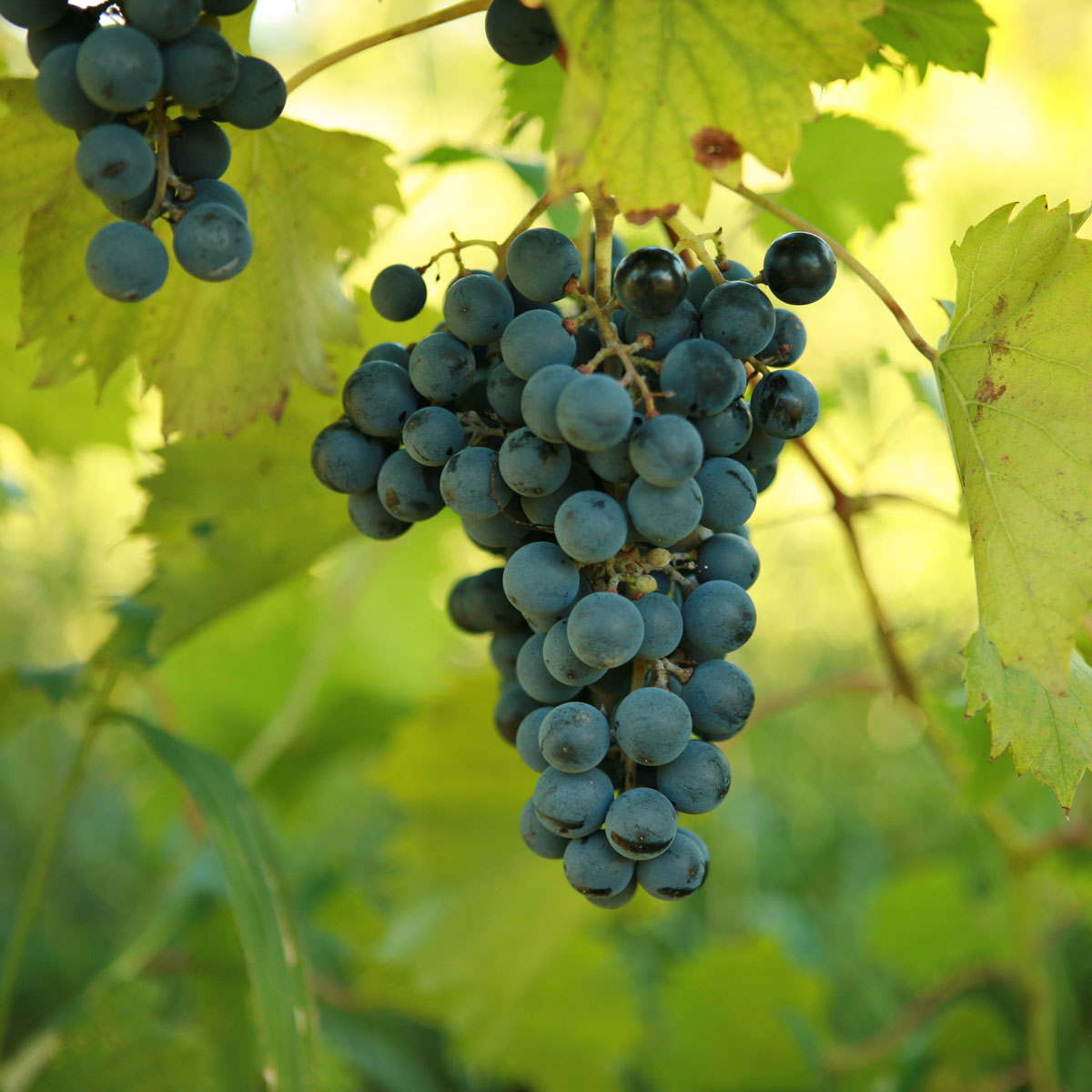
We cannot ship vines outside the United States or to the following states: California, Idaho, Washington, or Oregon.Chambourcin is a French-American hybrid red wine grape valued for deep color, low tannin and bright cherry and plum fruit. This Chambourcin grapevine is grafted onto 101-14 rootstock, which gives moderate vigor and earlier ripening, a useful edge for a variety that needs a long season. The blue-black Chambourcin grape makes smooth dry reds, fruity rosé, sparkling wine and port-style dessert wines, and it adds color to blends.
Chambourcin's strongest trait is how reliably it produces. Vines are self-fertile, have medium vigor and a trailing habit, and bud break 5 to 7 days after Concord, which helps the vine avoid spring frost. Chambourcin grapes ripen late and need at least 3,000 growing degree days, making the variety best suited to USDA Hardiness Zones 6 to 8 and a favorite in the Mid-Atlantic, Midwest and South.
For care, plant vines 6 to 8 feet apart and train them to a Top Wire Cordon. Chambourcin tends to overcrop, so thin clusters keep the fruit deeply colored and aromatic. It is highly susceptible to black rot and moderately susceptible to downy mildew and botrytis, so a regular spray program pays off. Avoid sulfur sprays, which can burn the leaves.
- Hardiness Zone 6
- Hardiness Zone 7
- Hardiness Zone 8
- Wine
- Grafted Vinifera
- 101-14 Rootstock
- 3309 Rootstock
- Grafted Hybrids
- 1103P Rootstock
- Riparia Rootstock
USDA Hardiness Zones categorize regions by average winter temperatures, guiding growers to choose plants suited for their climate. Learn More
Top Wire Cordon is arguably the most efficient training system for grapes, especially for procumbent or downward growing cultivators, especially those not prone to late season fruit rots due to shading of the fruiting zone. Summer labor is much less than that required with Vertical Shoot Positioned (VSP) training as shoot positioning and leaf pulling are generally not required. Learn More
To learn more about the types of diseases susceptibile on our plants, click here.
Black Rot
Highly susceptibleDowny Mildew
Moderately susceptiblePowdery Mildew
Slightly susceptibleBotryitis
Moderately susceptibleSusceptibility Meanings
Highly susceptible: Prone to disease and requires intensive management.
Moderate susceptible: May develop disease but manageable with regular care.
Slightly susceptible: Naturally resistant with minimal risk, needing basic care.
Grape Color
Blue, BlackPrimary Use
WineWine Color
RedVariety Origin
FranceParents
Seyve-Villard 12-417 x ChancellorPseudonym (Tested As)
JS 26-205Year Released
UnknownHarvest Season
Late SeasonSulfur Sensitivity
Highly susceptibleVine Vigor
Medium VigorGrowth Habit
TrailingSuggested Distance Between Vines
6 ft - 7 ft - 8 ftBud Break
5-7 Days after Concord