Valiant Grapevine - Standard
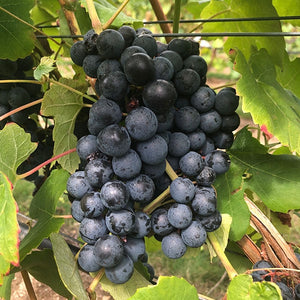
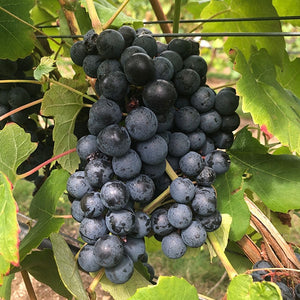
Valiant is extremely winter hardy and produces small, compact clusters of small berries that ripen reliably. It is used for juice and jelly where other varieties are not hardy enough to be grown.
Tempranillo is Spain’s signature red grape, known for early ripening and full-bodied, earthy wines. Tempranillo grape vines are suited for USDA zones 6-9, they perform well in warm, dry climates. Great for varietal wines or blends, Tempranillo offers flavors of cherry, tobacco, and leather. Typic...
Swenson Red produces medium to large conical clusters with large, round, non-slipskin berries with firm flesh. Can be used to make a distinctive white wine as fermentation on the skins is not recommended.
Steuben produces to large, compact clusters of medium-sized, spherical slipskin berries with a spicy tang. Steuben can produce an aromatic white, blush, or rosé wine.
A sister seedling of La Crosse, St. Pepin typically produces fruit with low acidity and is used for German style white wines and for ice wine. Not self-pollinated so must be planted near another variety that blooms at the same time.
St. Croix produces wines that have been compared to a light to medium burgundy. Sugar content and tannins are low at maturity, but St. Croix has been used both as a varietal and for blending.
Schuyler is extremely productive, with large clusters of soft, juicy black berries largely lacking Labrusca flavors. Used as a table grape and for the production of a neutral light red wine.
A full sibling of Himrod, Lakemont has milder flavor and more compact clusters with fairly small berries. Not as winter hardy as Himrod.
In the early 1800s, Isabella was widely planted in the North Atlantic and New England States where Catawba could not reliably ripen, but it fell out of favor after Concord was introduced. Isabella can withstand tropical and sub-tropical climates and is the most widely planted grape cultivar in so...
Hope - [Pat. PP25,697] is a green seedless grape with a fruity flavor and high yields. Berries are non-slipskin, typically without traces of seeds, while fruit texture is soft. Vines are moderate in vigor, but negative observations on Hope have included excessively tight clusters and moderately t...
Diamond is one of the few white American varieties that has been used to produce sweet, dry, and sparkling wines. Although largely replaced by Niagara for white grape juice production, Diamond is considered a superior wine variety.
Referred to as "the best American table grape" in The Grapes of New York (Hedrick, 1907), Delaware is an early-ripening red variety with small berries and clusters, and mild flavor. Of the labrusca types, it has the best fruity notes and the least labrusca character. It requires a deep, fertile, ...
Neptune - [Pat. PP12,302] produces large, attractive, conical clusters with yellow-green, non-slipskin berries. Any seed traces are soft and unnoticeable when eating. Moderately thick skin resists cracking, flavor is fruity without Labrusca foxiness. *Propagation of this variety is prohibited by ...